ISWCS 2026
20th International Symposium on
Wireless Communication Systems (ISWCS'26)
Wireless Communication Systems (ISWCS'26)
24 - 26 August 2026
Gold Coast, Australia
Gold Coast, Australia
Meet our distinguished keynote speakers at ISWCS 2026.
We are pleased to welcome distinguished scholars to deliver keynote talks at ISWCS 2026.
Speaker: Professor Sumei Sun
Affiliation: Agency for Science, Technology, and Research (A*STAR), Singapore
Abstract:
Digitalization, decarbonization, intelligence, automation, and autonomy are driving the transformation of maritime transportation. Achieving these goals requires high-fidelity, real-time situational awareness to enhance navigational safety, operational efficiency, and emission-aware decision-making in complex maritime environments. Integrated 5G and emerging 6G terrestrial and non-terrestrial networks (TN–NTN), combined with native AI and sensing, are poised to enable real-time connected and embodied intelligence for reliable maritime operations in congested ports, coastal waters, and beyond-line-of-sight environments.
This keynote will highlight how maritime AI is advancing next-generation vessel traffic management and improving operational efficiency while supporting decarbonization. It will underscore the importance of high-fidelity spatial-temporal data streams for high-performance AI models and outline a roadmap for integrated 6G TN–NTN communications, sensing, and AI as key enablers of connected maritime intelligence. The talk will conclude with emerging opportunities and research directions for resilient, intelligent, and sustainable maritime ecosystems.
Biography:
Dr Sumei Sun is the Executive Director of A*STAR Institute for Infocomm Research (I2R), and A*STAR's Coordinating Executive Director for Hub of the Future (HOTF). She holds a joint appointment with the Singapore Institute of Technology, and an adjunct appointment with the National University of Singapore, both as a full professor.
With strong passion in industry-relevant research and technology creation, Sumei has authored and co-authored more than 400 technical papers. She is the inventor/co-inventor of over thirty patented technologies, with most of them licensed to industry. She's a Fellow of the Academy of Engineering Singapore (SAEng), Fellow of the IEEE, AI Industry Alliance (AIIA), and Asia-Pacific AI Association (AAIA). Sumei's current research interests include next-generation communications, sensing-communications-computing-control integrative design, applied AI, and next-generation transportation systems. She's recipient of the IEEE ComSoc Donald W. McLellan Meritorious Service Award 2024, IEEE ComSoc Inaugural Asia Pacific Women in Communications Engineering Outstanding Achievement Award (2024), 2023 IEEE VTS Women's Distinguished Career Award, and Singapore National Day 2022 Public Administration Medal (Bronze).
Speaker: Professor Yonghui Li
Affiliation: University of Sydney
Abstract:
Reliable communication has traditionally been defined as the reliable recovery of bits. This abstraction has been remarkably successful. By separating source coding from channel coding, modern systems obtain mathematical structure, efficient implementation, and strong reliability guarantees. Yet the information carried by today's networks is rarely structureless. Natural language, images, video, sensor streams, prompts, and machine-generated messages all contain rich statistical and semantic regularities. With the rapid progress of foundation AI models, these source structures can now be modeled and used as source priors in communication systems.
This talk introduces semantic error control coding as a new direction that connects foundation AI models with classical error control coding. Instead of replacing the communication chain with a fully learned transceiver, the goal is to preserve the structure of channel coding while allowing the decoder to exploit source semantics. In this framework, semantic priors generated by foundation AI models are integrated with channel likelihoods, parity constraints, and soft reliability information from the channel decoder to guide codeword candidate selection, probability updating, iterative decoding, and retransmission decisions. The central question is how to make error control coding source-aware while retaining the rigor and reliability of coding theory.
Using natural-language and image transmission as examples, the talk will demonstrate how semantic priors can enhance the performance of short block codes, low-density parity check codes, convolutional codes, ordered statistics decoding, and coded multi-user reception. Across these examples, semantic priors and channel observations reinforce each other, delivering significant gains over conventional channel decoding in both BLER and semantic scores. The talk will conclude by outlining open challenges and future research directions.
Biography:
Yonghui Li is now a Professor and Director of Wireless Engineering Laboratory in the School of Electrical and Information Engineering, University of Sydney. He is the recipient of the Australian Research Council (ARC) Industry Laureate Fellowship in 2025, ARC Queen Elizabeth II Fellowship in 2008, and ARC Future Fellowship in 2012. He is an IEEE Fellow and a Clarivate Highly Cited Researcher. His current research interests are in the area of wireless communications. Professor Li was an editor for IEEE Transactions on Communications, IEEE Transactions on Vehicular Technology, and a guest editor for several special issues of IEEE journals, such as IEEE JSAC, IEEE IoT Journal, and IEEE Communications Magazine. He received best paper awards from several conferences. He has published one book, more than 300 papers in premier IEEE journals, and more than 200 papers in premier IEEE conferences. His publications have been cited more than 30,000 times.
Speaker: Professor Zhiguo Ding
Affiliation: Nanyang Technological University
Abstract:
Due to the explosive growth in the number of wireless devices and diverse wireless services, next-generation wireless networks face unprecedented challenges caused by heterogeneous data traffic, massive connectivity, ultra-high bandwidth efficiency and ultra-low latency requirements. To address these challenges, flexible-antenna systems have been recognized as key enabling technologies of the sixth-generation (6G) wireless networks, as they can intelligently reconfigure users' effective channel gains and hence significantly enhance their data transmission capabilities. However, the existing flexible-antenna systems have been developed to combat small-scale fading in non-line-of-sight (NLoS) conditions. As a result, they lack the capability to reconstruct strong line-of-sight (LoS) links which are typically 100 times stronger than NLoS links. Furthermore, the existing flexible-antenna systems exhibit restricted flexibility, where adding/removing an antenna is not straightforward. This talk focuses on an innovative flexible-antenna system, termed generalised pinching-antenna systems, and how such a new physical technology can reshape the future network architecture. The principles of generalized pinching-antenna systems are described first together with specific examples of generalized pinching-antenna systems, including Docomo's dielectric waveguide based pinching antennas, leaky coaxial cable (LCX), etc. In addition, promising 6G related applications of generalized pinching antennas, including environment division multiple access (EDMA), integrated sensing and communication, multi-cell interference management, etc, are also illustrated. Finally, important directions for future research, such as antenna/waveguide deployment, channel estimation, etc, are highlighted.
Biography:
Zhiguo Ding is currently a Professor in Communications at Nanyang Technological University and an Academic Visitor at Princeton University. His research interests are 6G networks, communications and signal processing. His h-index is over 100 and his work receives 70,000+ Google citations. He is serving as the EiC of IEEE JSAC, an Area Editor for IEEE TWC and OJSP, an Editor for IEEE TVT and OJ-SP, and was an Area Editor for IEEE TCOM and OJCOMS, an Editor for IEEE TCOM, TWC, COMST, WCL, CL and WCMC. He received the best paper award of IET ICWMC-2009 and IEEE WCSP-2014, the EU Marie Curie Fellowship 2012-2014, the Top IEEE TVT Editor 2017, IEEE Heinrich Hertz Award 2018, IEEE Jack Neubauer Memorial Award 2018, IEEE Best Signal Processing Letter Award 2018, Alexander von Humboldt Foundation Friedrich Wilhelm Bessel Research Award 2020, IEEE SPCC Technical Recognition Award 2021, IEEE VTS Best Magazine Paper Award 2023, and the Best Paper Award in IEEE GLOBECOM 2024. He is a Web of Science Highly Cited Researcher in two disciplines (2019-2025), and a Fellow of the IEEE.
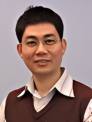
Speaker: Professor Jinhong Yuan
Affiliation: University of New South Wales
Abstract:
TBD
Biography:
Jinhong Yuan (Fellow, IEEE) received the B.E. and Ph.D. degrees in electronics engineering in 1991 and 1997, respectively. From 1997 to 1999, he was a Research Fellow with the School of Electrical Engineering, The University of Sydney, Sydney, Australia. In 2000, he joined the School of Electrical Engineering and Telecommunications, University of New South Wales, Sydney, where he is currently the Head of School. He has published two books, five book chapters, over 300 papers in telecommunications journals and conference proceedings, and 50 industrial reports. He is a co-inventor of one patent on MIMO systems and four patents on low-density-parity-check codes. His current research interests include error control coding and information theory, communication theory, wireless communications, and delay-Doppler domain signal processing and communications. He has co-authored five Best Paper Awards and one Best Poster Award, including the 2025 IEEE Asia–Pacific Best Paper Award; the Best Paper Award from the IEEE International Conference on Communications, Kansas City, MO, USA, in 2018; the Best Paper Award from the IEEE Wireless Communications and Networking Conference, Cancun, Mexico, in 2011; and the Best Paper Award from the IEEE International Symposium on Wireless Communications Systems, Trondheim, Norway, in 2007. He was listed as the 2025 Highly-Cited Researcher. He served as the IEEE NSW Chapter Chair for the Joint Communications/Signal Processions/Ocean Engineering Chapter from 2011 to 2014. He served as an Associate Editor for IEEE Transactions on Communications from 2012 to2017 and from 2020 to 2025 and IEEE Transactions on Wireless Communications from 2019 to 2024.

Speaker: Professor Iain Collings
Affiliation: Macquarie University
Abstract:
Uncrewed Aerial Vehicles (UAVs) are emerging as key components of post-5G and future 6G networks. It is increasingly important to cater for UAVs as mobile terminals in the network, and also to be able to deploy them to enhance the network provision, with the potential to augment terrestrial base stations in high-demand scenarios. They are expected to be particularly useful for temporary coverage at large-scale events and play an instrumental role in public safety, offering rapid deployment during emergencies such as earthquakes and wildfires, especially when ground networks are compromised. They also have great potential for use in distributed IoT applications, to collect measured data stored in remote devices. This talk will discuss the use of UAVs to provide communications support for ground vehicles in urban environments and will present a method for predicting Line-of-Sight (LoS) coverage regions in challenging scenarios with practical low flying heights and narrow street canyons. It will also present methods for designing energy-efficient flight trajectories for a rechargeable UAV with battery capacity limitations, performing data collection from widely distributed IoT ground nodes. Other applications will also be discussed.
Biography:
Iain Collings is a Professor in the School of Engineering, Macquarie University, Sydney, Australia, since 2014, where he has served terms as Head of Department and Deputy Dean of School. He received a PhD in systems engineering from the Australian National University 1995 and has published over 300 papers in the area of wireless communications. He is a Fellow of the IEEE. He was awarded the Engineers Australia IREE Neville Thiele Award 2009, and the IEEE CommSoc Stephen O. Rice Award in 2011. Previously he spent nine years at the CSIRO, where he held a number of roles including Deputy Chief of Division, Research Program Leader, and Theme Leader, and nine years at the Universities of Melbourne and Sydney. He has served as an Editor for IEEE Transactions on Wireless Communications, and has Co-Chaired numerous Technical Program Committees of major international conferences. He has served as the Chair of the IEEE NSW Section Joint Communications & Signal Processing Chapter (2008-2010), and Secretary of the IEEE NSW Section (2010).
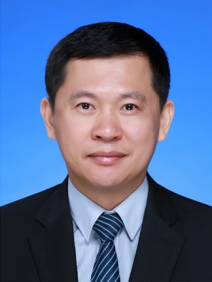
Speaker: Distinguished Professor Wei Xiang
Affiliation: La Trobe University, Australia
Abstract:
This talk traces my journey from information theory and wireless communications to AI for science, highlighting how artificial intelligence is reshaping scientific discovery, engineering innovation, and healthcare translation. I will discuss the Cisco-La Trobe Centre for AI and IoT, established in partnership with Cisco to advance translational research at the intersection of AI, IoT, edge intelligence, and connected systems.
I will also introduce the Australian Centre for AI in Medical Innovation (ACAMI), developed in partnership with the Victorian Government as the world's first university innovation centre dedicated to AI-driven medical innovation. Supported by Australia's fastest DGX H200 supercomputing platform, launched with NVIDIA, ACAMI aims to accelerate the development and deployment of trustworthy AI for healthcare and medical research.
The talk will also reflect on how these initiatives contributed to receiving the Australian Financial Review AI Award in 2026, recognising leadership in building Australia's AI innovation ecosystem.
Biography:
Dist. Prof. Wei Xiang is a La Trobe Distinguished Professor, Cisco Research Chair of AI and Internet of Things (IoT) and Co-Director of Research of the La Trobe AI Institute. He has founded two world-class research centres, namely, Cisco-La Trobe Centre for AI and IoT in partnership with Cisco and the Australian Centre for AI in Medical Innovation (ACAMI) in partnership with the Victorian Government. ACAMI is the world's first university innovation centre specialising in AI-driven medical innovation. He was instrumental in launching Australia's fastest DGX H200 supercomputing platform at ACAMI in partnership with NVIDIA in May 2025. He received the Australian Financial Review (AFR) AI Award in June 2026. For six consecutive years (2020 to 2025), he has been consistently ranked among Stanford University World's Top 2% Scientists for both single-year and career-long impact. Prof. Xiang has secured over $39.8M in external research funding (ARC, NHMRC, MRFF, CSIRO, AIMS, Cisco, Coles, Aglantis, etc.), including $18.8M for projects where he served as lead or sole CI. He is an elected Fellow of the Institution of Engineering and Technology (IET) and Engineers Australia.